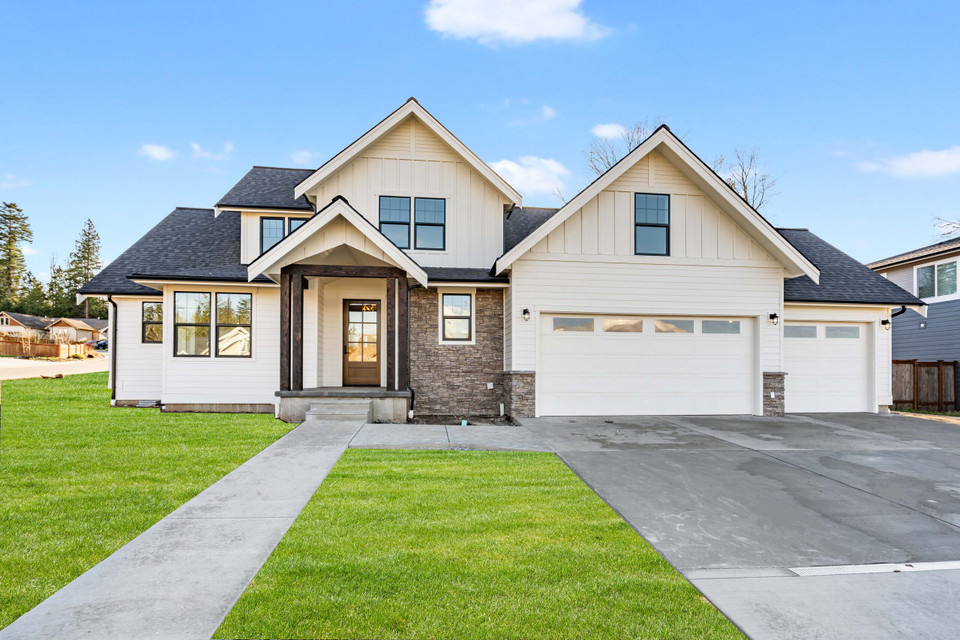


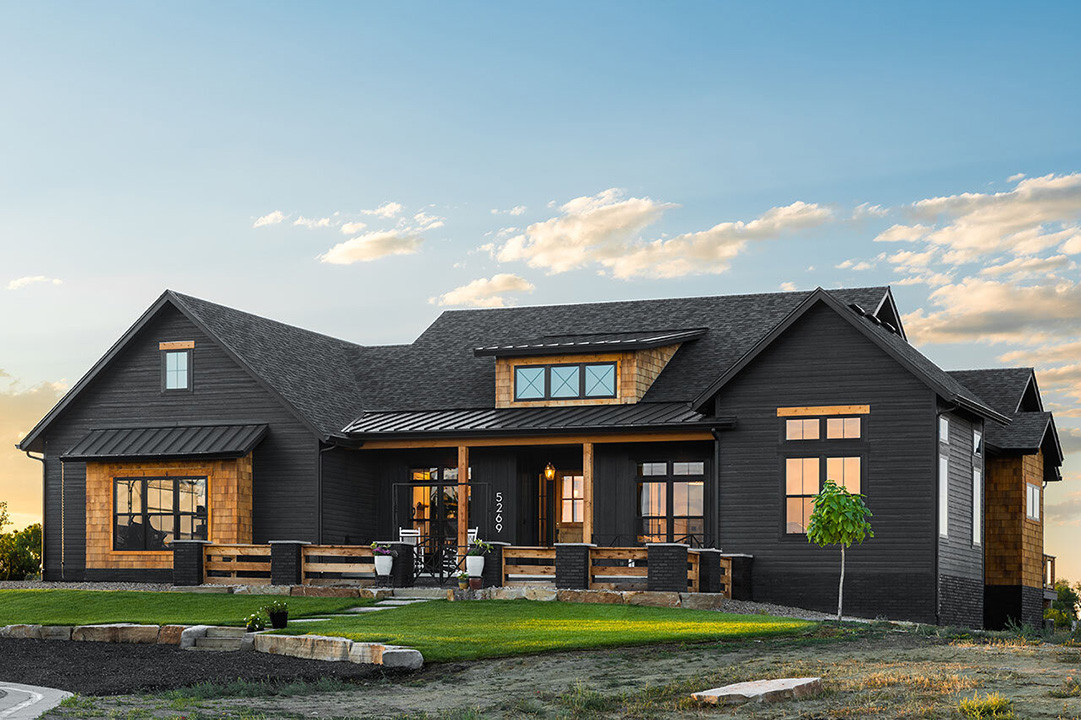
Every year brings new aesthetic preferences, new material technologies, and new building practices, but 2025 is different. This year’s architectural trends signal a deeper shift in how Americans want their homes to function, not just how they look. Buyer behavior, updated building codes, and real-world lifestyle changes are reshaping footprints, rooflines, and layouts at a structural level. We’re witnessing a movement away from decorative trends and toward architecture that supports healthier living, more flexible use, and long-term efficiency.
The House Plan Company markets thousands of plans from the nations top designers and architects and tracks consumer inquiries, and reviews feedback directly from builders and homeowners. In 2025, the strongest design trends share one thing in common: they optimize space, light, energy, and function. They solve problems instead of decorating around them. They elevate the usefulness of every square foot.
In this article we unpack the most influential architectural and floor-plan trends of the year so far; why they’re happening, how they manifest in real home plans, and whether they’re long-term structural shifts or short-lived preferences. If you’re updating plan inventory, preparing a custom design, or planning a future build, this guide will help you prioritize investments that pay off.
Indoor–Outdoor Continuity as a Structural Goal
What This Trend Looks Like Architecturally
Indoor–outdoor living has been popular for a decade, but 2025 is the year it becomes structural, not optional. This goes far beyond adding French doors to the dining room.
Today’s plans integrate outdoor spaces through
- multi-slide or accordion openings connecting family rooms to covered patios,
- aligned circulation paths that make indoor–outdoor movement intuitive,
- extended rooflines creating year-round porches and all-season rooms,
- exterior zones designed as functional rooms (outdoor kitchens, fire pits, screened lounges).
Architecturally, this trend affects wall heights, header spans, roof structures, and mechanical layouts, making it a central element, not a decorative one.
Why It’s Popular
Homeowners want natural light, social connection, and flexible entertaining space. But the post-pandemic shift to spending more time at home firmly cemented outdoor access as part of daily living, not just weekends.
Is It Long Term?
Absolutely. Large openings and outdoor rooms now appear in every plan size — including 1,200–1,600 sq. ft. small homes. It’s a permanent shift toward healthier, brighter homes.
Floor Plans Built Around Natural Light (Daylighting as a Design System)
How It Shows Up in 2025 Plans
We are seeing the rise of what designers call “daylight architecture.” Instead of treating window placement as an afterthought, new plans position walls, traffic patterns, and even rooflines based on how light travels through the home.
Key architectural moves include:
- Window walls replacing entire elevations in main living areas
- Corner windows in kitchens and dining spaces
- High clerestory windows in vaulted great rooms
- Interior light wells or small courtyards increasing daylight penetration
- Transom windows above hallways or interior doors
Why It’s Popular
Natural light has become a quality-of-life feature. It enhances mental health, makes smaller homes feel larger, and reduces the need for artificial lighting. Builders report that homes with abundant daylight show significantly better — especially online — which drives adoption.
Is It Long Term?
Yes — this is a structural, performance-driven shift.
Daylighting is central to energy efficiency, occupant wellness, and future resale strength.
Simplified Footprints With Smarter Space Allocation
What This Means Architecturally
2025 homes aren’t necessarily smaller, they’re smarter. Architects are eliminating “dead” square footage and scaling homes more efficiently.
We see:
- rectangular or L-shaped footprints that reduce framing complexity,
- reduction of oversized two-story foyers,
- hallways shortened or eliminated,
- primary suites positioned to reduce noise transfer,
- leaner mechanical chases designed early for efficiency,
- storage integrated into structural cavities rather than added as bulk.
The goal is not minimalism; it’s function per square foot.
Why It’s Popular
Construction costs remain historically high. Homeowners want every square foot to feel intentional, and builders appreciate reduced complexity.
Is It Long Term?
Yes. The market is rewarding right-sized, efficient plans over bloated square footage.
The Continued Rise of One-Story and “Main-Level Living” Designs
What It Looks Like in 2025
Demand for single-level homes keeps climbing due to aging-in-place preferences, accessibility awareness, and construction efficiency.
Even two-story plans now often include:
- main-level primary suites,
- main-level guest suites,
- laundry connected to the primary closet,
- minimal stairs between main living areas and garage/entry zones.
We also see bonus rooms and lofts replacing full second stories, giving families flexibility without sacrificing accessibility.
Why It’s Popular
- Aging-in-place planning
- Reduced energy costs
- Easier navigation for families with young children
- Simpler HVAC zoning
- Better flow to outdoor spaces
Is It Long Term?
Yes, very. This is demographic, not stylistic.
Multi-Functional Flex Rooms Replace Specialized Spaces
Architectural Expression of This Trend
Instead of formal dining rooms or rigid office layouts, 2025 plans offer purpose-flexible square footage. These rooms are usually placed near the entry or at circulation crossroads for maximum usefulness.
Common versions include:
- A pocket office with built-in storage
- A flex bedroom with dual access doors
- A “bonus loft” sized to serve as media room, homework space, or fitness zone
- A semi-open den off the kitchen
- A convertible guest suite with bathroom access
Architecturally, this affects wall placement, window location, and structural spans. The key is adaptability, not carved-in-stone purpose.
Why It’s Popular
Lifestyle needs shift quickly. Families want rooms that can evolve: home office today, nursery tomorrow, hobby space next year.
Is It Long Term?
Yes. Flexibility is becoming a baseline expectation in new construction.
Kitchens as Architectural Anchors, Not Just Rooms
Architectural Shifts in 2025
Kitchens now form the spatial anchor of a home’s layout. Instead of being edge-oriented or semi-enclosed, they are increasingly positioned at the center of the floor plan with clear sightlines and direct access to the outdoors.
Key architectural elements include:
- Oversized kitchen footprints integrated with dining and living spaces
- Separate service pantries or prep kitchens (a major 2025 trend)
- Direct access to grilling patios
- Large islands aligned with the home’s main axis of circulation
- Built-in refrigerator walls that require integrated, planned framing
Why It’s Popular
Families spend most of their communal time in and around the kitchen. Making it the geographic and visual center of the plan supports modern living.
Is It Long Term?
Yes. The kitchen-as-hub model isn’t going anywhere, but prep kitchens may shift as costs fluctuate.
- Garage-Forward Functionality With Side-Entry and Split-Garage Options
Architectural Expression
Garages are evolving in interesting ways. While they remain essential, homeowners want them visually minimized.
Architects are addressing this with:
- side-entry garages to de-emphasize street presence
- split garages (2-car + 1-car bays) for flexible storage
- extended depth for hobbies, tools, or small vehicles
- attached mechanical spaces that support future EV charging or battery systems
- covered breezeways connecting detached garages to the main home
Placement of the garage now affects curb appeal expectations and circulation flow more than ever.
Why It’s Popular
- The desire for cleaner façades
- Modern vehicle storage (including EV infrastructure)
- Increased homeowner interest in hobby/workshop zones
Is It Long Term?
Yes, especially EV-supportive designs. Split and side-entry concepts will endure, but oversized hobby bays may vary by market.
Cleaner, Simpler Rooflines With Purpose-Driven Geometry
How It Shows Up in 2025
Rooflines are becoming more efficient, geometrically clean, and aligned with energy goals.
Architectural characteristics include:
- simple gables replacing overly complex, multi-peaked roof structures
- shed roofs for modern elevations
- solar-ready roof slopes oriented south or southwest
- low-profile dormers designed for usable attic space
- continuous overhangs improving passive shading and rain management
This trend reduces construction complexity while supporting energy performance and long-term durability.
Why It’s Popular
- Builders push for simplified framing to reduce costs.
- Solar integration is shaping roof geometry.
- Homeowners gravitate toward clean, modern silhouettes.
Is It Long Term?
Yes. The shift toward solar-aligned roofs and simplified geometry is structural.
Secondary Suites, Casitas, and Multi-Generational Layouts
Architectural Components
The demand for multi-generational living continues to rise, and plans are responding with:
- attached casitas or guest suites with separate entries
- over-garage suites with semi-private stairways
- main-level in-law suites separated from primary living zones
- bathrooms with dual access for aging relatives or adult children
- fully self-contained auxiliary dwelling layouts in larger plans
These are not aesthetic tweaks, they require electrical, plumbing, insulation, and circulation decisions early in the design process.
Why It’s Popular
Families want flexibility: aging parents, adult children, long-stay guests, or rental income. Multi-gen options also reduce the need for future additions.
Is It Long Term?
Yes. Demographic data supports sustained demand for multi-gen capable layouts.
Centralized Utility & Mechanical Planning (The “Smart Core”)
What It Is
2025 plans increasingly integrate a central mechanical and utility core to streamline systems:
- Clustered HVAC, water heaters, and electrical panels
- Dedicated EV-charging infrastructure in garage layouts
- Pre-framed chases for future battery storage
- Smart home hubs placed centrally for better device coverage
- Attic or mechanical lofts for easy maintenance access
This reduces energy loss, simplifies maintenance, and prepares homes for future technology upgrades.
Why It’s Popular
Energy prices, code updates, and homeowner interest in efficiency make system planning a necessity.
Is It Long Term?
Yes. Every sign points to ongoing integration of smart mechanical layouts.
Transitional Architecture With Regionally Adaptable Exteriors
Architectural Features
Homeowners want timeless exteriors, but not cookie-cutter ones. Transitional architecture blends traditional and modern lines, keeping homes broadly appealing.
2025 exteriors feature:
- clean gables mixed with softer roof transitions
- balanced window grids
- simplified trim packages
- mixed natural materials (stone, board-and-batten, metal roofing)
- covered porches sized for true daily use (8'–10' depths)
Plans often list multiple exterior options for the same footprint, modern farmhouse, cottage, craftsman, or modern, allowing design adaptation without altering the plan structure.
Why It’s Popular
Buyers want character without risking premature stylistic dating.
Is It Long Term?
Yes. Exterior adaptability is a strategic asset for plan longevity.
Compact Luxury Layouts in Smaller Footprints
How This Trend Appears in Plans
Homes between 1,400 and 2,000 sq. ft. are gaining architectural features traditionally reserved for larger homes:
- vaulted great rooms
- expanded mudrooms with built-ins
- walk-in pantries even in compact kitchens
- primary suites with separated vanities
- covered outdoor rooms integrated into the main footprint
- large windows and simplified structural spans that make small plans feel grand
The goal is not size, it’s experience.
Why It’s Popular
Affordability challenges push homeowners to pursue smaller homes without sacrificing quality or livability.
Is It Long Term?
Yes. “Small but stunning” is a trend defined by economic and lifestyle forces.
Connection Between Garage, Mudroom, Pantry, and Kitchen
The “Service Spine” Trend
Architects are refining a back-of-house circulation route known as the service spine, creating seamless transitions from car to kitchen.
Common sequences include:
Garage → Mudroom → Pantry → Kitchen
or
Garage → Drop Zone → Laundry → Primary Closet → Primary Suite
These keep family logistics smooth and reduce clutter in public rooms.
Why It’s Popular
It streamlines daily living: groceries, laundry, backpacks, sports gear, pets — everything flows through an intentionally designed back channel.
Is It Long Term?
Yes. It’s practical, market-tested, and highly requested.
More Thoughtful Privacy Zoning in Open-Concept Homes
How It Appears Architecturally
Open concept is still dominant, but architects are adding micro-zoning elements to increase privacy while preserving flow.
This includes:
- angled or offset room placement
- short privacy halls into bedroom wings
- half-walls or structural columns creating subtle division
- kitchen alcoves or prep-pantries that hide mess
- slight elevation changes in multi-level homes
Open concept remains, but it’s becoming smarter and more nuanced.
Why It’s Popular
Families want openness without feeling exposed or noisy.
Is It Long Term?
Yes. This is a natural evolution of open-concept planning.
Outdoor Service Architecture: RV Bays, Workshops, and Storage Wings
Architectural Expression
Not all homeowners want a huge garage, but many want purpose-driven space adjacent to the home. 2025 plans often include:
- RV bays
- boat storage
- workshops with exterior doors
- garden equipment alcoves
- tool/utility nooks integrated into garage massing
These spaces are structurally connected but often visually downplayed.
Why It’s Popular
Homeowners want hobby space and storage — but prefer it consolidated rather than scattered in sheds or add-ons.
Is It Long Term?
Moderate to long-term. Regional variation applies, but demand remains high.
The Big Story of 2025’s Architectural Trends
Across all categories, a simple truth emerges:
The 2025 home is designed to work harder, architecturally and functionally, for its occupants.
Rather than relying on decorative trends, homeowners now look for:
- better natural light,
- better circulation,
- better structural efficiency,
- better energy readiness,
- better zoning and flexibility,
- better transitions between spaces,
- and better long-term value.
These are architectural fundamentals, not passing styles.
For The House Plan Company, the mission in 2025 is clear:
Deliver plans that feel future-ready, efficient, and adaptable with thoughtful architectural moves that support modern life.